Worked example
40-bedroom hotel
65% occupancy · €1.2m F&B revenue
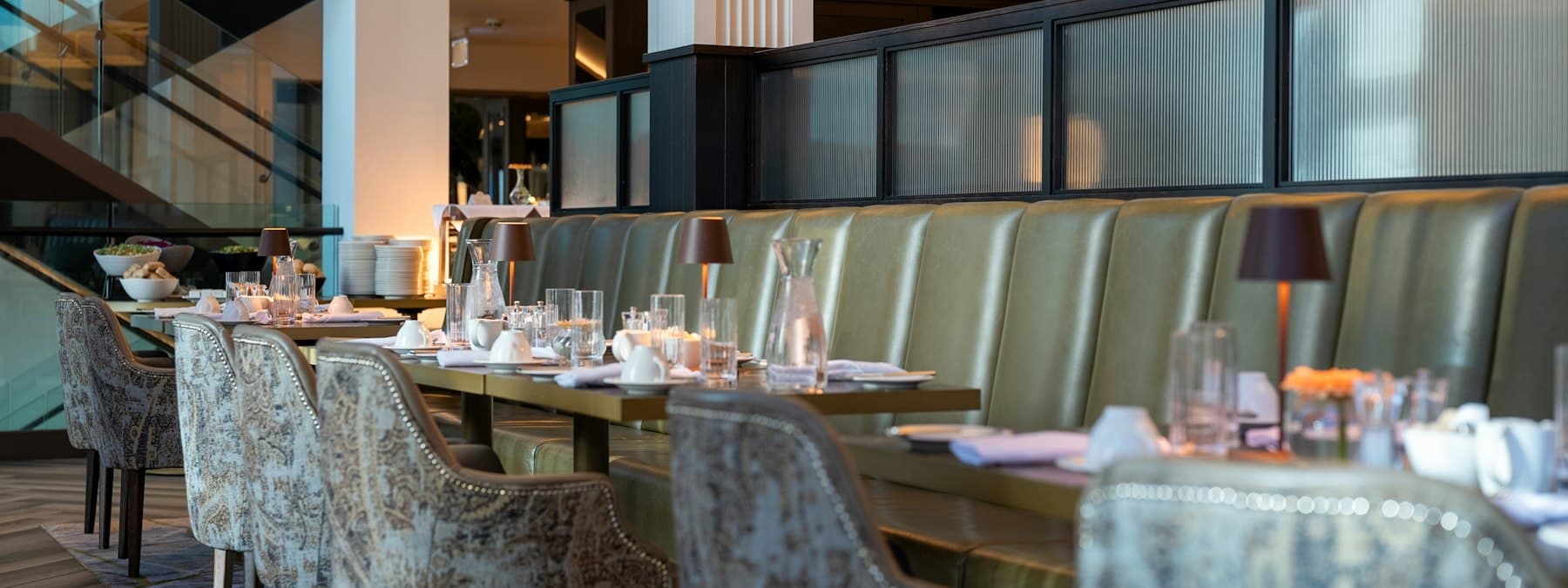
Hotel dining room, Placeholder
01
—Profile
Profile
A 40-bedroom hotel running at around 65% occupancy, with annual food and beverage revenue of roughly €1.2 million. The programme covers whole-business procurement alongside food and beverage performance — buying better across every category, then improving what each euro of F&B revenue actually returns.
02
—The opportunity
The opportunity
Target
3–4% off addressable procurement spend, and a 2 percentage-point improvement in F&B gross margin.
Annual benefit
€45,000
Procurement improvement — 3%
€60,000
Procurement improvement — 4%
€24,000
F&B gross margin — 2 percentage points
€69,000–€84,000
Total potential annual benefit
Illustrative business case. Figures would be validated against twelve months of actual invoices, contracts, purchasing history, revenue and management accounts before any saving is committed.
03
—What we'd review
What we'd review
Category
Review areas
- Food
- Meat, fish, produce, grocery, frozen, dairy, bakery
- Beverage
- Wine, beer, spirits, soft drinks, coffee
- Linen & laundry
- Bed linen, towels, table linen, laundry services
- Energy & utilities
- Electricity, gas and fuels, related services
- Cleaning & guest supplies
- Chemicals, amenities, consumables
- Maintenance
- Parts, consumables and operating supplies
- Waste & other
- Waste, stationery and recurring services
04
—The F&B programme
The F&B programme
With annual F&B revenue of around €1,200,000, two percentage points of gross margin is roughly €24,000 of additional gross profit a year. Getting there means recipe costing, menu engineering, portion control, stock and waste, purchasing variance, beverage yields, and watching theoretical GP against what you actually deliver.
KPI
Purpose
- F&B revenue
- Monitor sales performance
- Food and beverage cost %
- Control cost of sales
- Theoretical GP
- Establish expected performance
- Actual GP
- Measure delivered performance
- Stock variance
- Identify leakage and control issues
- Waste
- Identify avoidable cost
- Menu mix
- Improve contribution
05
—Twelve months
Twelve months
Month 1
Audit and baseline
Twelve months of purchasing, suppliers, contracts, invoices, menus, recipe costs, stock, waste and F&B financials, reviewed properly.
Months 2–3
Procurement
Benchmark prices, aggregate purchasing, tender or renegotiate the key categories, establish preferred suppliers and purchasing controls.
Months 2–6
F&B improvement
Cost the recipes, review menus and pricing, tighten portion control, cut waste, improve stock control, track theoretical GP against actual.
Months 6–12
Continuous management
Monthly reporting against the agreed baseline — savings, gross margin, stock variance, waste and supplier performance.
06
—Next step
Start with a diagnostic on twelve months of your own purchasing and F&B data. What comes out of it is a validated savings figure, a category-by-category plan, an F&B margin plan and a monthly reporting framework — all based on your numbers, not these ones.
Let's improve your profitability together.
Start with a conversation. We'll look at what you're buying and tell you honestly what we think we can do.